Transformation Co-Owner Model | IT Services 2030 Capabilities

How IT services firms move from delivery partner to transformation co-owner through business acumen, product thinking, and outcome accountability.
From Delivery Partner to Transformation Co-Owner: New Capabilities for IT Services 2030
By 2030, the IT services industry will be divided into two fundamentally different categories of provider: those still selling effort, rates, and headcount in RFP cycles where lowest unit cost wins -- and those positioned as genuine transformation co-owners, sharing risk with clients, co-designing products and platforms, and building client capabilities that compound value long after the formal engagement ends.
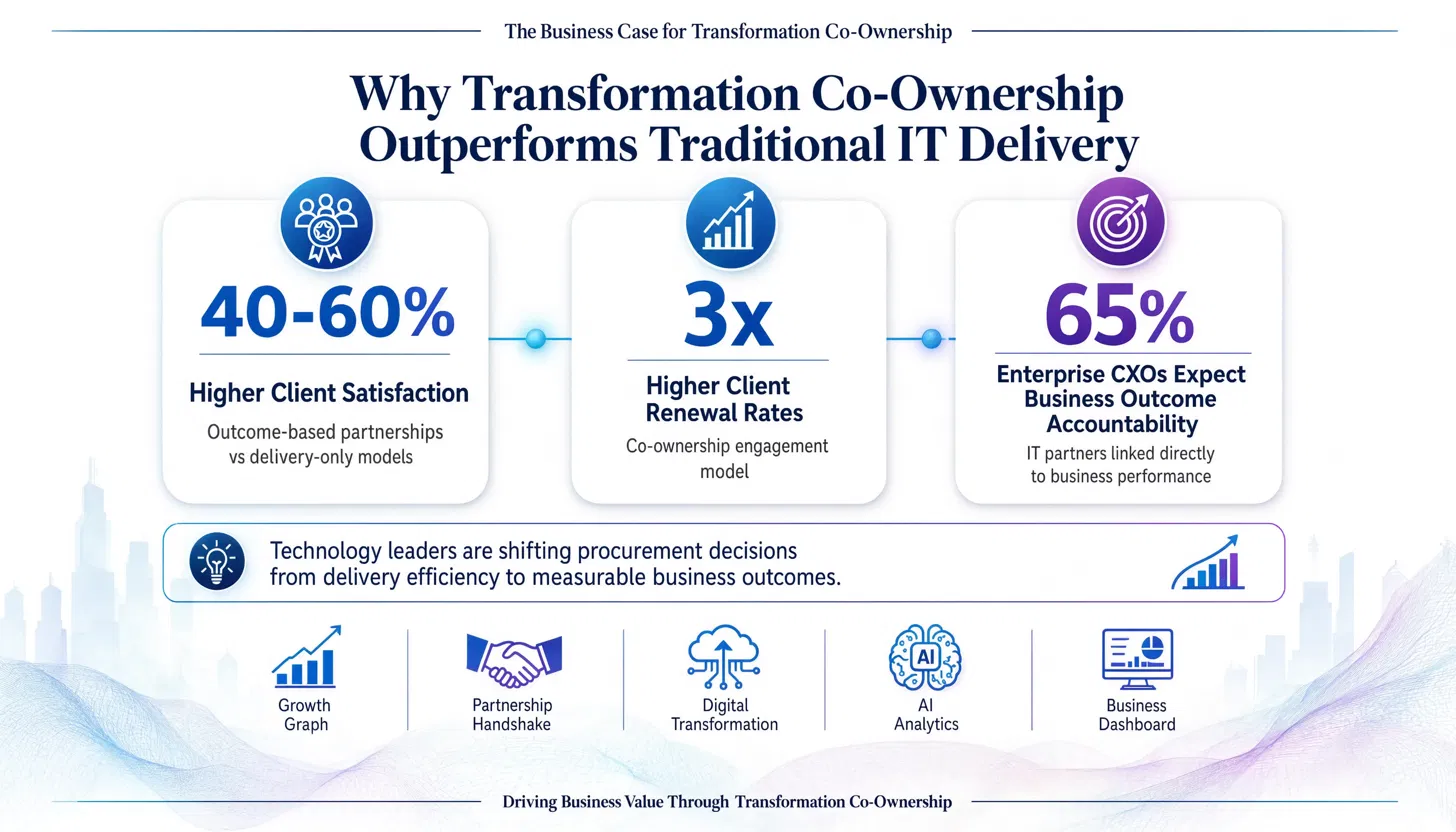
How Are Client Expectations Shifting From Output to Outcomes?
The old contract between enterprise clients and IT services providers was straightforward. Clients defined scope, providers delivered to specification, and performance was measured through SLAs, uptime, and velocity. That model reflected a world in which technology was a support function. That world no longer exists.
Technology has become a core business engine. IT, analytics, data platforms, and digital capabilities sit at the center of growth strategy, customer experience design, and new business model creation. PwC (2023) research indicates that over 65 percent of enterprise CXOs now expect their primary IT services partners to demonstrate direct linkage between technology programs and business performance metrics such as revenue growth, cost reduction, and customer acquisition speed.
"We no longer hire IT partners to build systems. We hire them to help us win markets. That requires a completely different kind of relationship." — Chief Digital Officer, Global Financial Services Organization, PwC Technology Leadership Survey, 2023 |
Why Is the Traditional "Build and Run" Model Structurally Insufficient?
Delivery Has Been Commoditized
Staff augmentation and basic build services are now easy to compare, replicate, and replace. When value is defined in FTEs and utilization rates, a race to the bottom on unit economics is inevitable. Accenture (2023) estimates that over 40 percent of traditional IT services delivery activities will be automatable by AI-powered tools by 2027, meaning labor arbitrage as a core value proposition is approaching a structural endpoint.
Organizations Are in Continuous Reinvention Mode
Enterprises are no longer running discrete transformation programs. They operate in continuous reinvention, with new platforms, AI capabilities, regulatory changes, and competitive developments requiring ongoing strategic and technical adaptation. A project-by-project engagement model cannot provide the continuity, context accumulation, and strategic partnership depth that this environment demands.
The Industry Is Shifting From SLA Mindset to Value Mindset
Co-innovation and outcome-based partnerships demand shared accountability for real business results. When provider compensation is partially linked to the business outcomes they help create, the entire nature of the relationship changes. Strategic alignment, knowledge sharing, joint planning, and mutual investment in success become the operational norm.
Accenture (2023) estimates that over 40% of traditional IT services delivery activities will be automatable by AI-powered tools by 2027, making labor arbitrage an increasingly unsustainable primary value proposition. Source: Accenture, Future of IT Services Research, 2023 |
What Is the New Capability Stack for IT Services Leadership Through 2030?
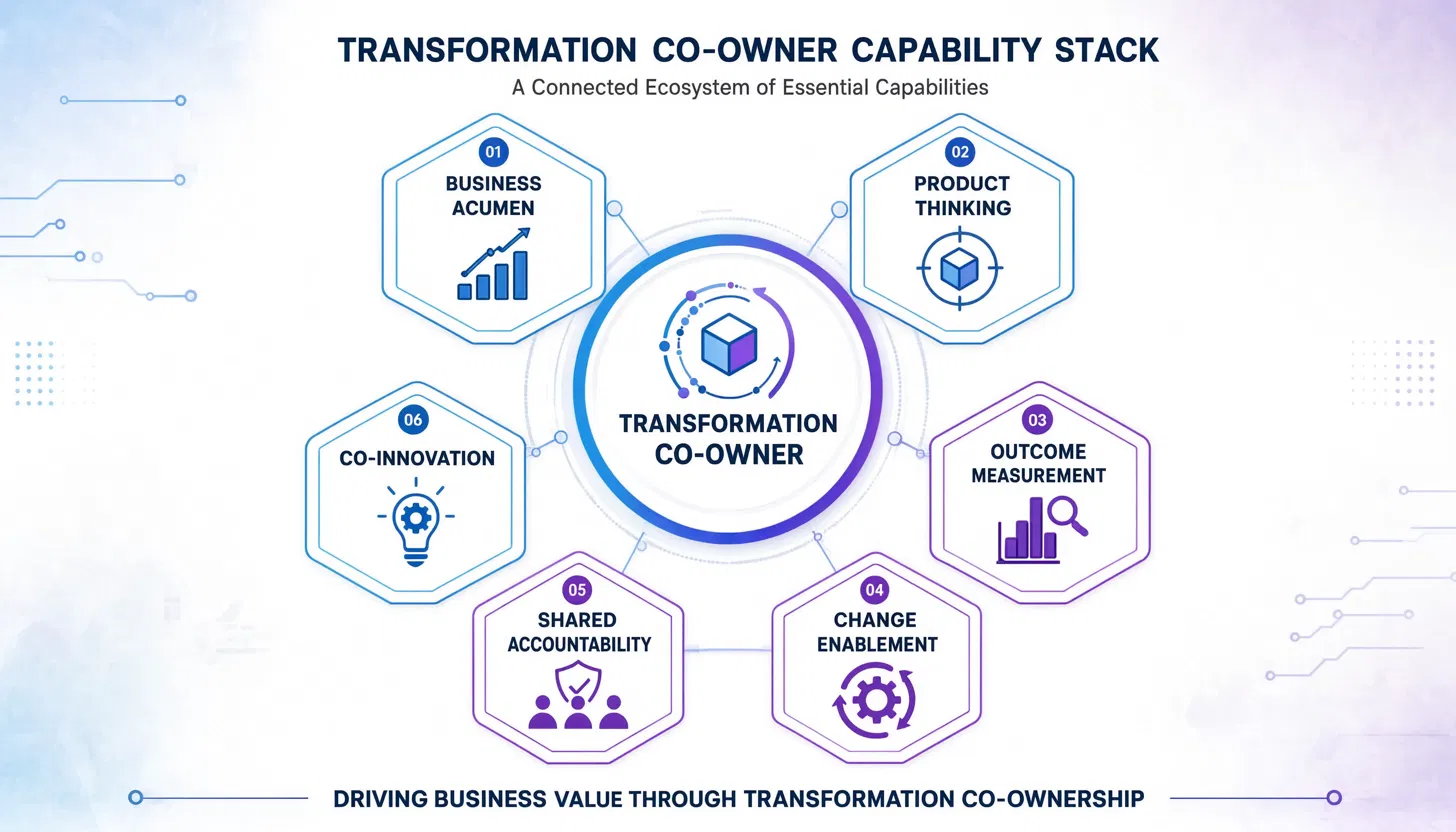
Industry and Business Acumen
Clients want partners who understand their industry economics, competitive dynamics, regulatory environment, and the specific trade-offs between risk, speed, and investment. KPMG (2023) identifies business acumen as the single most significant capability gap in IT services firms attempting to move into advisory and co-ownership roles. The technical depth is typically present; the business fluency to translate technical capability into commercial value conversation is not.
Unlock the Full Research
Create a free account or sign in to access the complete methodology, deep-dive analysis, and key implementation frameworks.
Don't have an account? It's free to join.
Organization Learning Labs
Research & Insights Division


Comments