Ghost Kitchen Talent Strategy: Building Platform Capability

Ghost kitchens and delivery platforms need different talent and behaviour than dine-in restaurants. A leadership guide to building platform-native F&B capability.
Invisible Kitchens, Visible Capability: Designing Talent, Learning and Behaviour for Platform-Native F&B Businesses
Ghost kitchens and delivery-first brands do not fail for lack of demand. They fail because leaders apply brick-and-mortar capability models to a fundamentally different operating system
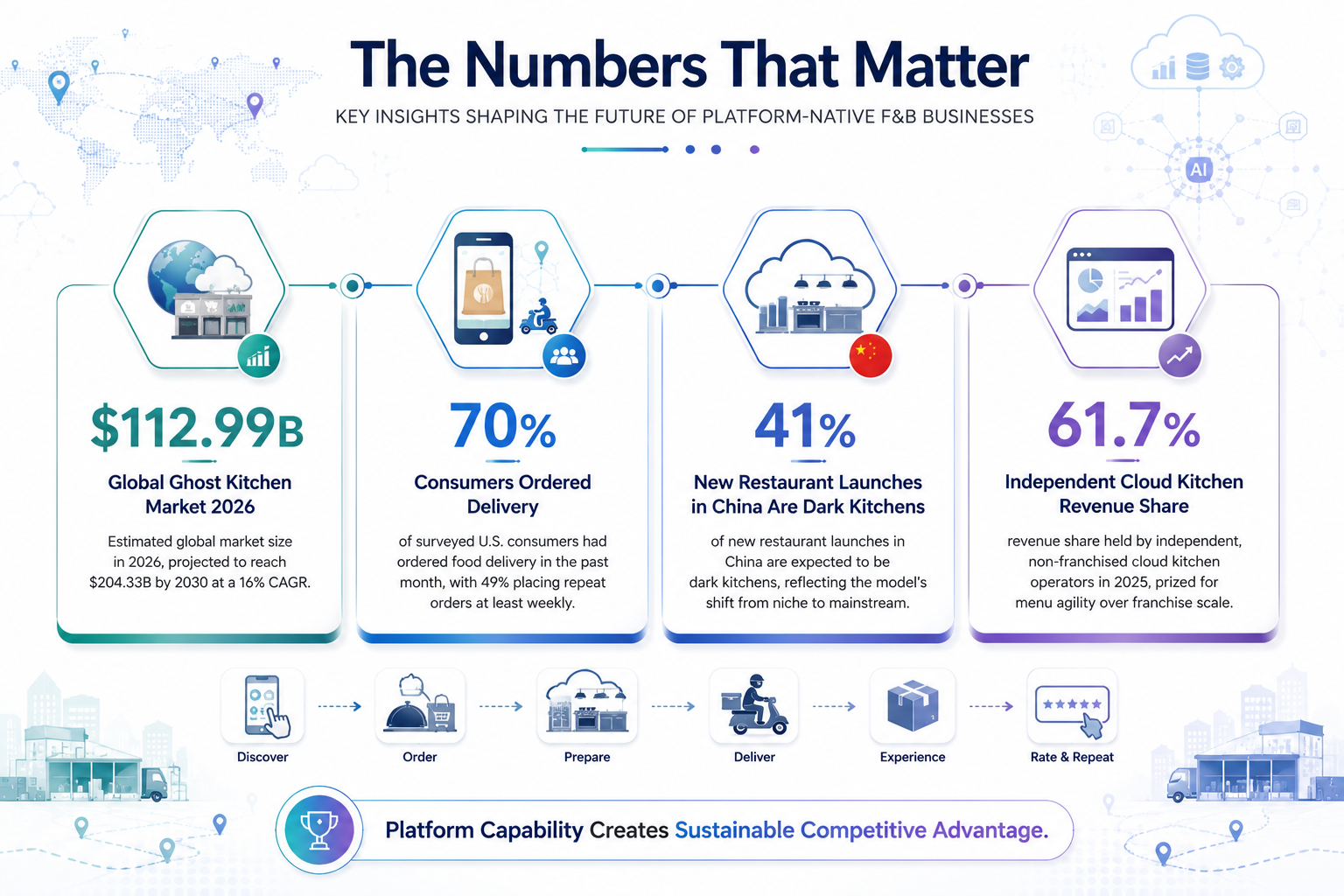
The Rise of the Invisible Kitchen
Ghost kitchens, delivery-only brands, and virtual menus have moved from pandemic-era improvisation to a structurally distinct segment of the food and beverage industry, one now valued at well over one hundred billion dollars globally and growing at rates that dwarf traditional restaurant expansion. The economics are genuinely different: no dining room, no front-of-house staff, no real estate premium for street visibility, but also no walk-in customer, no ambient brand experience, and near-total dependence on a third-party platform's algorithm, ratings system, and fee structure to reach anyone at all.
This is not brick-and-mortar restaurant operations with the dining room removed. It is a different business, run on different economics, requiring a different operating model, and most critically, requiring different capability from the people running it. The leaders struggling most in this segment are frequently not new entrants who misjudged the category. They are experienced restaurant operators who assumed their existing operational playbook would transfer with minor adjustment, only to discover that the skills which built a great dine-in brand, hospitality instinct, ambience design, front-of-house service culture, barely apply to a business where every customer interaction happens through a screen they do not control.
The Capability Stack for Platform-Native F&B
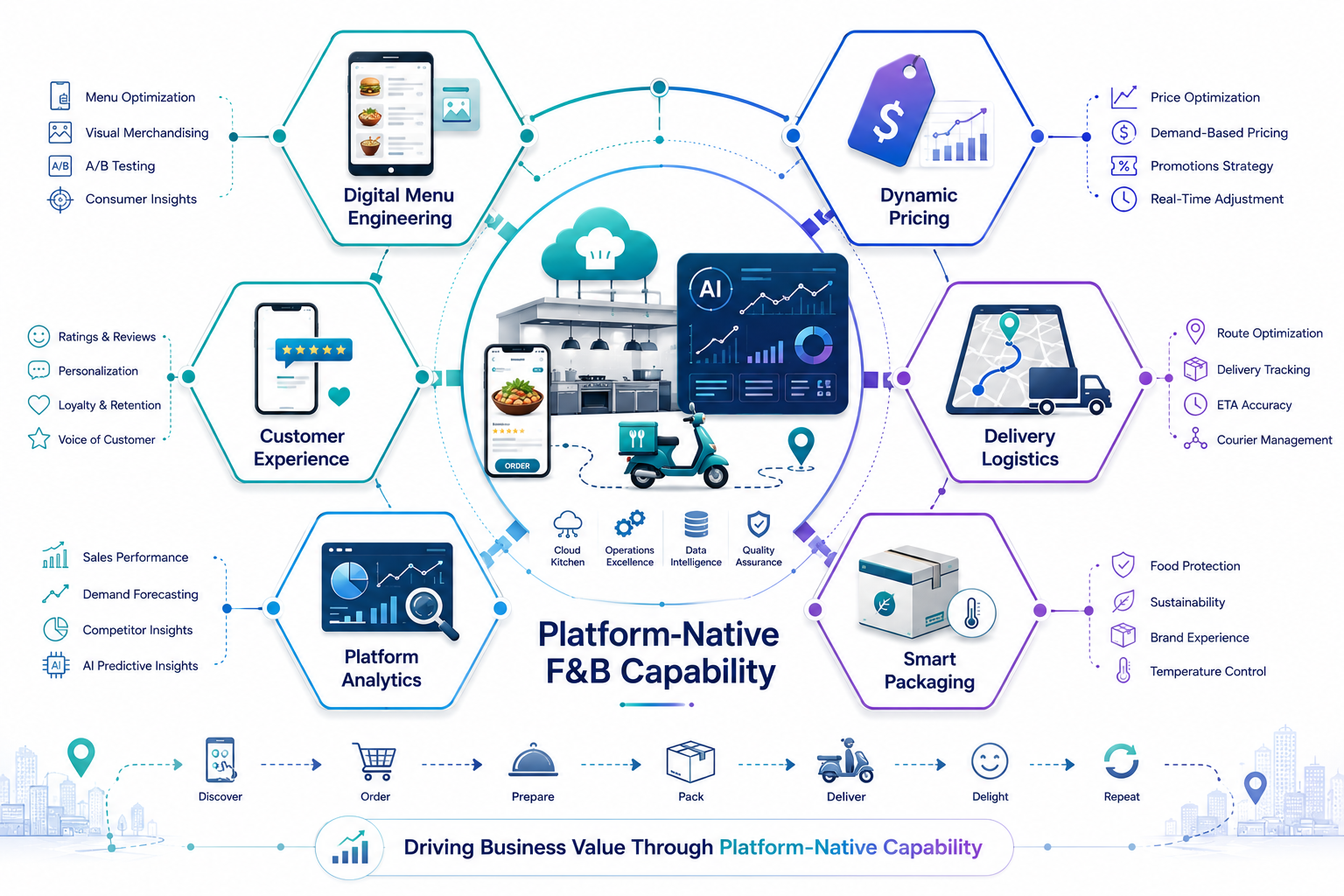
Digital menu engineering sits at the center of platform-native capability, and it is a genuinely different discipline from traditional menu design. Item names, descriptions, and photography must be optimized for a small mobile screen and a ranking algorithm simultaneously, and pricing must account for platform commission structures that can run to a substantial share of order value, a cost structure invisible in a traditional restaurant P&L but existential in a delivery-first one. Data-driven pricing, adjusted dynamically against demand patterns and competitor positioning within the same delivery radius, has become a core operating skill rather than a periodic strategic exercise.
Delivery logistics and packaging design round out the technical core, and packaging deserves more strategic attention than most operators give it: food that arrives soggy, cold, or visually collapsed after a twenty-minute delivery window generates a rating problem no amount of kitchen quality can offset after the fact. Building fluency in working with aggregator platforms, managing a public ratings profile actively rather than reactively, and reading platform-provided analytics as a daily operating input rather than a monthly report are all now baseline requirements, not advanced capability.
STRATEGIC INSIGHT Packaging is a capability gap hiding in plain sight. A kitchen can execute a dish perfectly and still lose the customer relationship if the packaging fails during a twenty-minute delivery window. Few operators invest in packaging capability with the seriousness they invest in the recipe itself. |
Talent Archetypes in the Ghost Kitchen Ecosystem
The operations and data hybrid manager, comfortable simultaneously running a physical kitchen and interpreting a platform analytics dashboard, has emerged as one of the hardest roles to source in this segment, precisely because it does not map to either a traditional kitchen management career path or a traditional digital marketing one. Digital brand chefs, who can develop a menu concept designed from inception for delivery rather than adapted after the fact from a dine-in menu, represent a similarly hybrid and scarce profile. Platform growth strategists, who understand the mechanics of aggregator ranking algorithms, promotional mechanics, and multi-brand virtual kitchen portfolio management well enough to run several virtual brands out of a single physical kitchen, complete the leadership archetype set.
At the front line, the behavioural requirements shift as much as the leadership ones. Speed, packaging accuracy, and precise communication with delivery couriers matter more than the hospitality and tableside skills that traditionally defined a strong front-of-house hire, and staff who thrive in a dine-in environment do not automatically thrive in a delivery-only one. Recruiting and training built around the old hospitality skill set will consistently underperform in this segment.
Learning Architectures for Platform Capability
Unlock the Full Research
Create a free account or sign in to access the complete methodology, deep-dive analysis, and key implementation frameworks.
Don't have an account? It's free to join.
Organization Learning Labs
Research & Insights Division


Comments